Flok
I built Flok to help groups find a day that works for everyone.
- Role
- Solo: product, design, build, launch
- Status
- Launched
- Year
- 2025
- Live
- joinflok.app
- 400
- Active users, first week
- 50+
- Groups
The problem
Every group plan begins with "when is everyone free?" and then dies there: in a chat thread, a poll nobody finishes, and four screenshots of four calendars.
The tools that exist ask you to schedule an event and then find people for it. The actual constraint runs the other way.
What I built
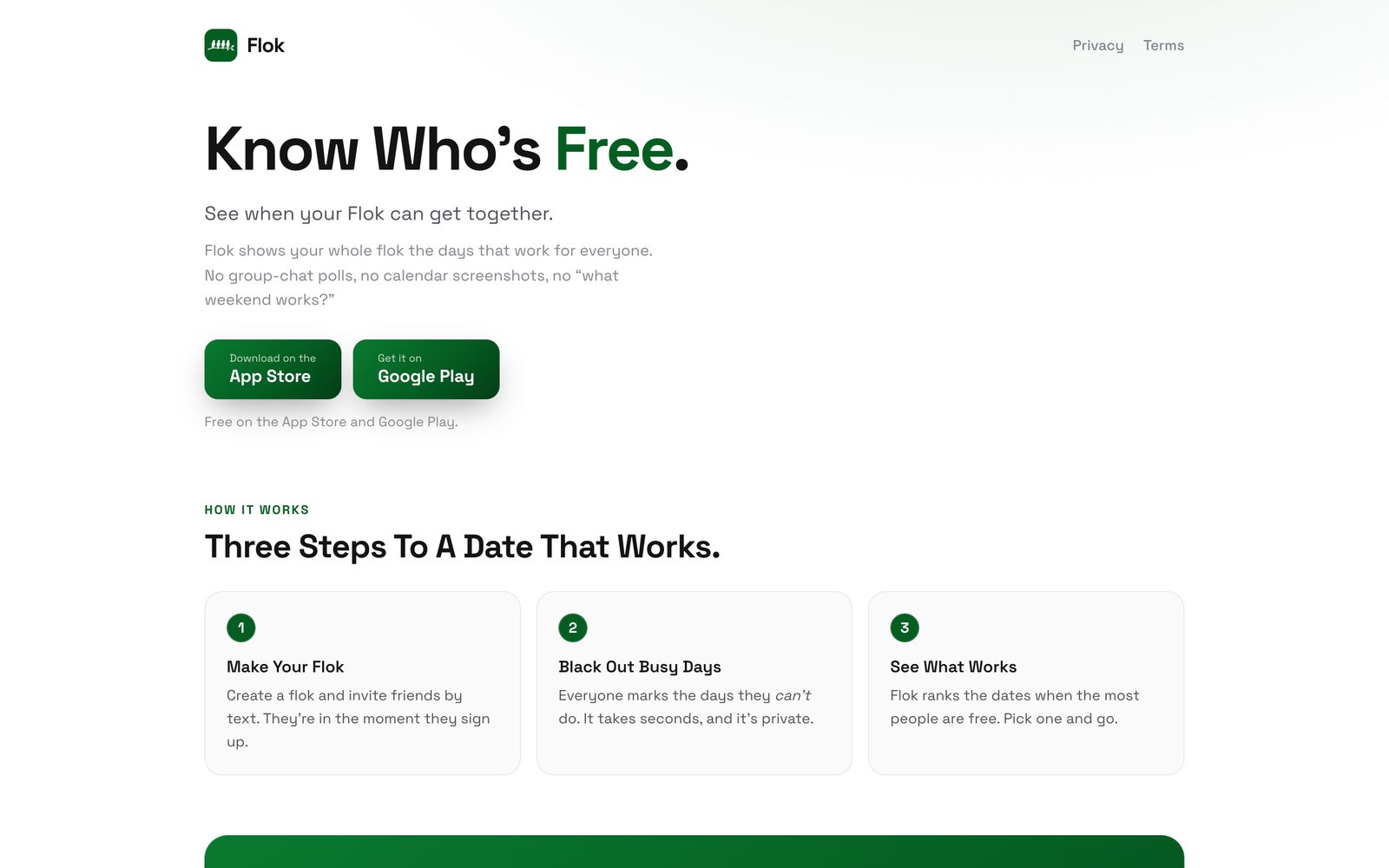
Flok inverts the order. You make a group, everyone marks the dates they can't do, and the calendar immediately shows which dates work for the most people.
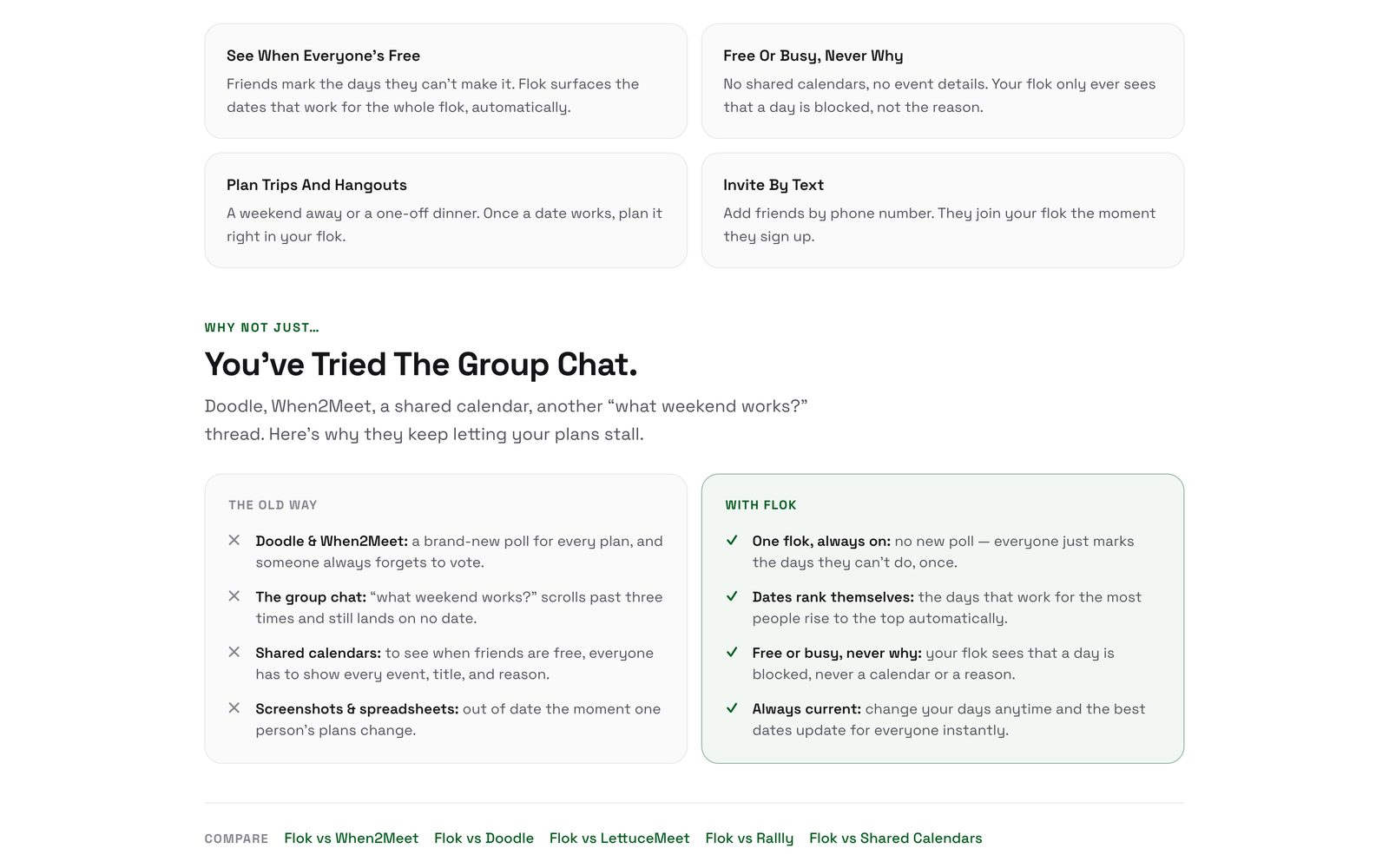
Marking unavailability is a much lower-effort ask than proposing times, and it's the input that resolves the question, so the group gets an answer in one pass instead of a negotiation.
Selected details
- The product
Create a flok, invite members by SMS, mark blackout dates. The shared calendar aggregates everyone's input into a readable percentage per date, so the best days surface without anyone tallying anything.
- Stack
I built Flok with React Native, Expo, Supabase, and Twilio SMS invites, and shipped it to the App Store and Google Play.
- Launch
A 50-tester beta, then Reddit and community launches, influencer and university outreach, short-form video, and direct outreach. I ran the acquisition side myself rather than treating launch as someone else's job.
Screens
Where it landed
I ran a beta with 50 testers, then launched to 400 active users across 50+ groups in the first week.
What I took from it
- Consumer is a different discipline from B2B, not a lighter one. Branding, group mechanics, and the first-run experience carry weight that a feature list doesn't.
- Getting the first users is a product problem as much as a marketing one. The invite loop is part of the product.